
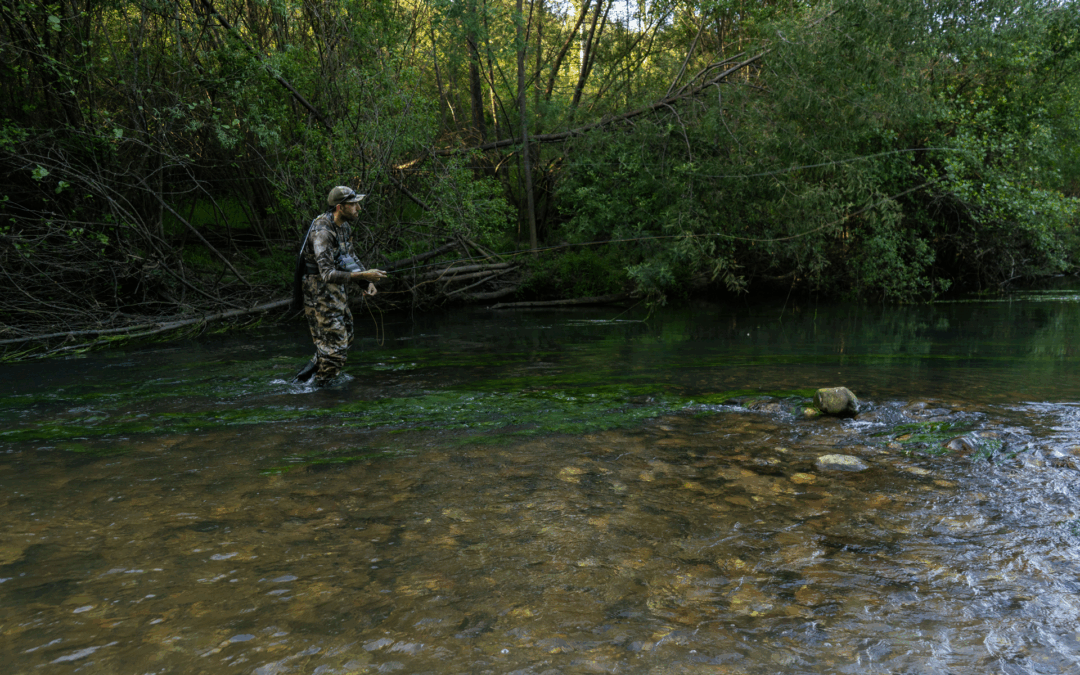
The Art of Fly Casting: How Practising Your Casting Technique Can Transform Your Fly Fishing Experience
The Connection Between Fly Casting and Successful Fly Fishing
Fly fishing is much more than simply placing an artificial fly in the water and waiting for a fish to take it. It is a discipline that combines technique, observation, patience and a deep understanding of the natural environment. Among all the skills involved in this fascinating activity, fly casting plays a fundamental role in determining the quality and success of a fishing experience.
Although many anglers focus primarily on fly selection, fishing locations or equipment, the importance of practising fly casting is sometimes underestimated. However, the ability to deliver a fly accurately, naturally and consistently can make a significant difference between a successful fishing session and a frustrating one.
Fly casting is not simply about distance. It is about control, precision, timing and presentation. Developing these skills through regular practice can transform the way anglers approach the water, improving not only their fishing performance but also their confidence and enjoyment.
Why Is Fly Casting Practice So Important?
One of the most important aspects of fly fishing is presentation. Unlike conventional fishing techniques, where the weight of the lure or bait generally helps deliver it towards the target, fly fishing relies on the weight of the fly line to carry the lightweight artificial fly.
This makes casting technique particularly important.
A well-executed fly cast allows the angler to present the fly with minimal disturbance, maintaining a natural drift and reducing the chances of alarming fish. In clear water, where fish can be particularly cautious, this can be decisive.
Regular fly casting practice helps develop several essential abilities:
- Accuracy: Placing the fly exactly where fish are feeding or holding.
- Distance control: Adjusting the casting range according to fishing conditions.
- Presentation: Delivering the fly naturally and avoiding unnecessary disturbance.
- Line management: Maintaining better control over the fly line during the cast and drift.
- Adaptability: Performing different casts depending on wind, vegetation, currents and available space.
These skills are not developed overnight. They require repetition, observation and an understanding of the mechanics behind an efficient fly cast.
Accuracy: Reaching the Right Place at the Right Time
In fly fishing, accuracy is often more important than distance.
A fish may be feeding close to the riverbank, positioned behind a rock or holding in a specific current seam. Being able to place an artificial fly precisely in these areas significantly increases the chances of presenting it correctly.
Practising short and medium-distance casts is therefore essential. Anglers who concentrate exclusively on long-distance casting may overlook one of the most valuable skills in fly fishing: the ability to control exactly where the fly lands.
Improved accuracy also allows anglers to fish more effectively in challenging environments, such as narrow streams, tree-lined rivers and areas with limited backcasting space.
Ultimately, a precise cast is not simply a technical achievement. It is a way of making better use of every fishing opportunity.
Better Presentation Means More Natural Drifts
One of the greatest challenges in fly fishing is achieving a natural presentation.
When a fly lands incorrectly or the fly line creates unwanted tension, the artificial fly may move unnaturally through the water. This phenomenon, commonly known as drag, can make even the most attractive fly less convincing to a selective fish.
Good casting technique helps anglers control the position of the fly line and leader, improving the chances of achieving a natural drift.
Techniques such as reach casts, aerial mends and curve casts can help manage line positioning and reduce unwanted drag.
Practising these techniques away from the water allows anglers to develop the coordination and control needed to apply them effectively during actual fishing situations.
The result is a more natural presentation, which can be particularly important when targeting trout and other cautious freshwater species.
Distance, Control and the Importance of Casting Mechanics
Although casting distance is not everything, being able to cast comfortably over longer distances is undoubtedly an advantage in certain fishing situations.
However, distance should never come at the expense of control.
An efficient fly cast depends on several interconnected elements:
- Smooth acceleration and controlled stopping.
- Appropriate casting stroke length.
- Proper timing between the forward and back casts.
- Effective use of the fly line and leader.
Understanding these mechanics makes it easier to identify mistakes and improve overall casting performance.
One common mistake among less experienced anglers is applying too much force. Powerful movements do not necessarily produce better casts. In fact, excessive force can result in inefficient loops, poor accuracy and unnecessary fatigue.
The key is to develop a smooth, progressive casting movement that allows the rod and fly line to work together efficiently.
How Fly Casting Practice Improves Your Confidence on the Water
Confidence is an often-overlooked aspect of successful fly fishing.
When anglers are comfortable with their casting technique, they can dedicate more attention to reading the water, identifying feeding activity and selecting the right fly.
Instead of constantly worrying about whether they can reach a particular fishing spot, they can concentrate on understanding fish behaviour and making better decisions.
This is particularly valuable in challenging conditions, such as strong winds, complex currents or rivers surrounded by vegetation.
Regular practice also reduces hesitation. When an opportunity appears, experienced anglers are more likely to react quickly and execute the appropriate cast without unnecessary movements.
In fly fishing, confidence is not about believing that every cast will be perfect. It is about knowing that you have the skills to adapt when conditions become difficult.
Practising Fly Casting Outside the Fishing Season
One of the best ways to improve fly fishing performance is to practise casting regularly, even when you are not fishing.
A suitable open space, a fly rod and a short practice session can provide excellent opportunities to refine technique.
Training outside the fishing season offers several advantages:
1. Developing muscle memory
Repeated casting movements help build consistency, making the correct technique feel increasingly natural.
2. Improving timing
Practising the relationship between the back cast and forward cast helps develop smoother and more efficient movements.
3. Working on accuracy
Using targets at different distances helps improve precision and distance control.
4. Learning new casting techniques
Off-water practice is an excellent opportunity to experiment with roll casts, reach casts, double hauls and other useful techniques.
5. Identifying technical mistakes
Without the pressure of an actual fishing situation, anglers can focus entirely on their movements and correct inefficient habits.
Even 15 to 20 minutes of focused practice can be beneficial when performed consistently.
Fly Casting Is About More Than Catching Fish
There is another important dimension to fly casting that deserves attention: the enjoyment of the technique itself.
For many anglers, the rhythm of the rod, the movement of the line through the air and the precision of a perfectly executed cast are among the most rewarding aspects of fly fishing.
A good cast combines coordination, timing and concentration. It creates a connection between the angler, the equipment and the surrounding environment.
This is one of the reasons why fly fishing is often considered an art as much as a fishing technique.
Improving casting skills does not necessarily mean catching more fish on every trip. Instead, it means becoming a more complete angler, capable of understanding different situations and responding to them with greater confidence and control.
Final Thoughts: Practice Makes a Better Fly Fisher
Fly casting is one of the foundations of successful fly fishing. Its influence extends far beyond the ability to send a fly line across the water.
Good casting technique improves accuracy, presentation, line control and adaptability. It also gives anglers the confidence to approach different fishing environments and take advantage of opportunities that might otherwise be missed.
Whether you are a beginner learning the fundamentals or an experienced angler looking to refine your technique, regular fly casting practice should always be part of your fishing routine.
Remember: the objective is not simply to cast further. It is to cast better, with greater precision, efficiency and purpose.
Because in fly fishing, a perfect presentation often begins long before the fly touches the water.
👉 Contact us today to book your guided fly fishing experience in Portugal.
📍 Visit: www.flyfishing.pt
📧 Email: andregomes@flyfishing.pt